
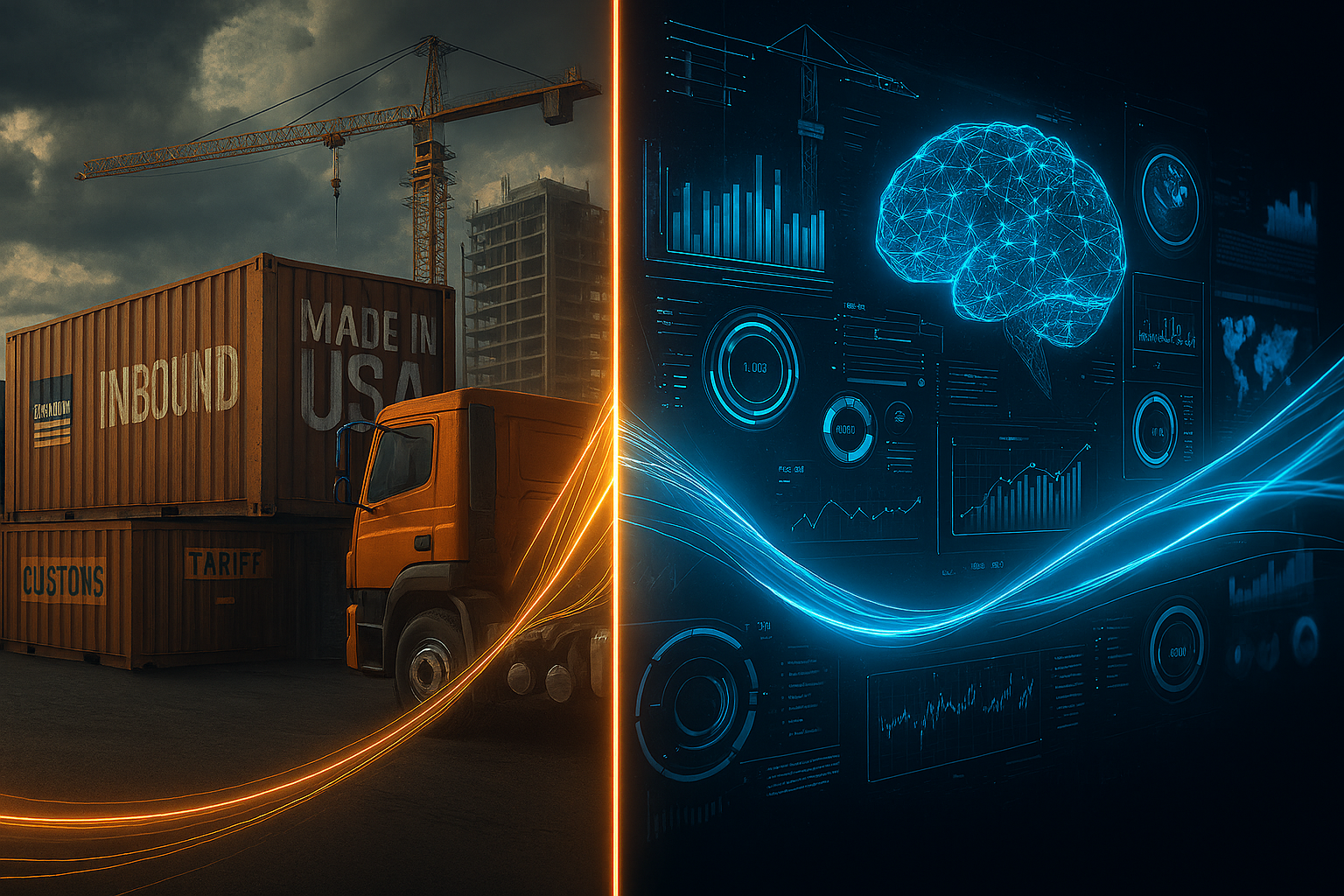
The global trade landscape is undergoing a seismic shift. With tariffs and trade restrictions becoming increasingly unpredictable, mid-market industrial companies face a perfect storm of challenges that threaten their competitiveness and profitability. From steel and aluminum to semiconductors and critical minerals, the cost of raw materials and components can swing dramatically based on policy decisions made thousands of miles away.
For mid-market manufacturers—those companies operating with revenues between $100 million and $1 billion—the stakes are particularly high. Unlike their enterprise counterparts, these companies often lack the resources to absorb sudden cost increases or the global footprint to easily pivot supply chains. Yet unlike smaller firms, they’re too complex to manage operations through spreadsheets and intuition alone.
The answer to this challenge isn’t just about lobbying for better trade policies or hoping for stability. It’s about building organizational resilience through data and artificial intelligence.
The Tariff Impact: More Than Just Higher Costs
When tariffs hit, the immediate impact is obvious: imported materials become more expensive. But the ripple effects are where mid-market companies really feel the pain. Lead times extend as suppliers scramble to find alternative sources. Quality variations increase as companies switch to unfamiliar vendors. Customer relationships strain as manufacturers face the difficult choice between absorbing costs or passing them along.
Consider a mid-sized precision parts manufacturer that sources specialty steel from overseas. A 25% tariff doesn’t just mean 25% higher material costs. It means renegotiating contracts with customers who locked in pricing six months ago. It means evaluating domestic suppliers who may have different quality specifications. It means analyzing whether to pre-buy inventory before tariffs escalate further, tying up precious working capital.
These decisions cascade through the organization. Production planning must account for longer and less predictable lead times. Finance needs real-time visibility into margin impacts across hundreds of SKUs. Sales teams need clear guidance on which products remain profitable and which customers should be prioritized.
Making these decisions with outdated data and manual analysis isn’t just inefficient—it’s dangerous. By the time you’ve compiled last month’s numbers into a PowerPoint deck, the market has already shifted.
Why Data and AI Are No Longer Optional
This is where data and AI move from “nice to have” to existential necessity. The companies that will thrive in this volatile environment are those that can sense changes faster, model scenarios more accurately, and respond more decisively than their competitors.
Real-Time Cost Visibility: AI-powered systems can integrate data from ERP systems, procurement platforms, and external market feeds to provide real-time visibility into landed costs. When tariff rates change or commodity prices spike, manufacturers can immediately understand the P&L impact across every product line and customer. This isn’t about generating prettier dashboards—it’s about compressing decision cycles from weeks to hours.
Intelligent Supply Chain Optimization: Machine learning models can analyze vast networks of suppliers, evaluating not just current costs but also risk factors like geopolitical exposure, financial stability, and historical reliability. When tariffs make a current supplier uneconomical, AI can quickly identify alternative sources that optimize for the complete picture: cost, quality, lead time, and risk.
Dynamic Pricing and Margin Management: Rather than applying blanket price increases that alienate customers, AI can help identify optimal pricing strategies for different customer segments and product categories. Which customers can absorb increases? Which products have margin cushion? Where can you bundle or substitute to protect relationships while preserving profitability?
Demand Forecasting Under Uncertainty: Traditional forecasting models break down when market conditions are volatile. Advanced AI approaches can incorporate alternative data sources—from news sentiment to shipping patterns—to provide early warning signals of demand shifts before they show up in order books.
Starting the Journey: Practical Steps for Mid-Market Leaders
The good news is that mid-market companies don’t need to transform into tech giants overnight. The path forward is about making strategic investments that deliver immediate value while building toward greater capability.
Start with data infrastructure. Before you can leverage AI, you need clean, accessible data. Many mid-market manufacturers have data trapped in silos—procurement in one system, production in another, financials in a third. Investing in data integration and governance may not be glamorous, but it’s foundational. The goal is a single source of truth that everyone can access and trust.
Focus on high-impact use cases. Don’t try to boil the ocean. Identify the two or three decisions that most directly impact your resilience to trade disruptions. For most industrial companies, this means supply chain visibility, cost modeling, and margin analysis. Deploy AI solutions that address these specific pain points and deliver measurable ROI within quarters, not years.
Build analytical capability. Technology alone isn’t enough. You need people who can interpret AI insights and translate them into business decisions. This doesn’t mean hiring a team of PhDs. It means upskilling your existing procurement, operations, and finance teams to be more data-literate and creating cross-functional processes where insights drive action.
Partner strategically. Mid-market companies should leverage external expertise rather than trying to build everything in-house. Cloud-based AI platforms, industry-specific solution providers, and consulting partners can accelerate time-to-value while avoiding the costly mistakes of DIY approaches.
The Competitive Advantage of Adaptation
Trade volatility isn’t going away. Whether it’s tariffs, export controls, or supply chain security requirements, geopolitical factors are now permanent variables in industrial operations. The companies that treat this as a temporary problem to be weathered will find themselves perpetually on their back foot.
The winners will be those that use this disruption as a catalyst for transformation. By investing in data and AI capabilities now, mid-market industrial companies can turn tariff uncertainty from an existential threat into a competitive advantage. They’ll make better decisions faster, preserve margins when competitors stumble, and build the operational excellence that drives success regardless of the external environment.
The question isn’t whether your company can afford to invest in data and AI. It’s whether you can afford not to.
- We can help you regardless of where you are in your Data & Analytics Journey. To learn more Click Here.
- Contact Us for more information
- See all of our Blog Post Here
- Follow us on LinkedIn for our weekly content and though leadership posts